Flat Clearance Yeading: Recycling and Sustainability Commitment
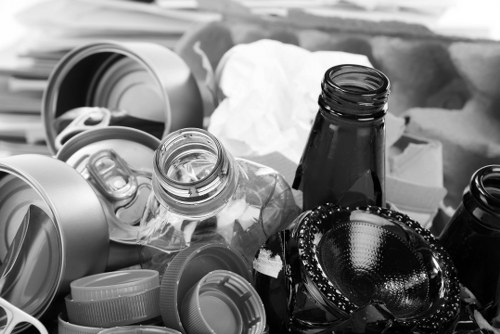 At Flat Clearance Yeading we place environmental stewardship at the centre of every clearance. Our Yeading flat clearance teams follow an eco-friendly waste disposal plan designed to minimise landfill and maximise reuse. From careful on-site segregation to prioritising donation and refurbishment, our approach to the sustainable removal of household items helps create a cleaner, greener local rubbish area and contributes to borough-level waste ambitions.
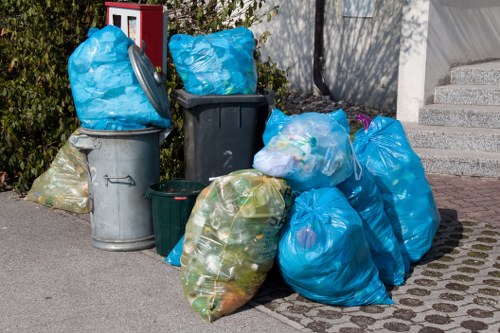
We operate as a specialist flat clearance in Yeading provider that aligns with local authority strategies. Many surrounding boroughs operate multi-stream kerbside collections — separating food waste, paper/card, glass, plastics and textiles — and we mirror those practices on every job. That means initial sorting on-site, moving recyclable materials to appropriate containers, and ensuring hazardous items are handled in compliance with council regulations and environmental best practice.
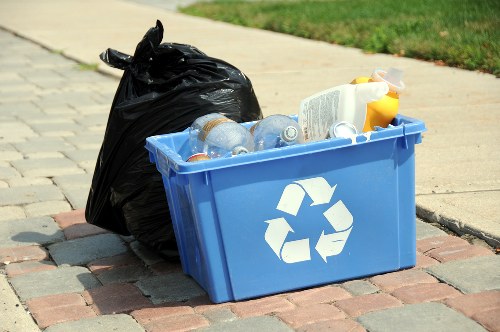 Our measurable sustainability target is a **recycling percentage goal**: we are committed to achieving a 65% recycling rate for all materials collected through our clearances by 2030. To reach this, we track outputs from flat removals Yeading operations, diverting items to reuse channels and accredited waste transfer facilities rather than sending them to landfill.
Part of meeting this recycling percentage target requires practical partnerships. We work closely with local transfer stations and civic facilities to streamline the routing of materials: examples include the nearby Hillingdon transfer and reuse points and regional centres such as Southall recycling hubs. These transfer stations provide sorting, baling and onward transport to specialist processors for glass, metals, bulky wood and construction waste, enabling a robust circular flow for recovered materials.
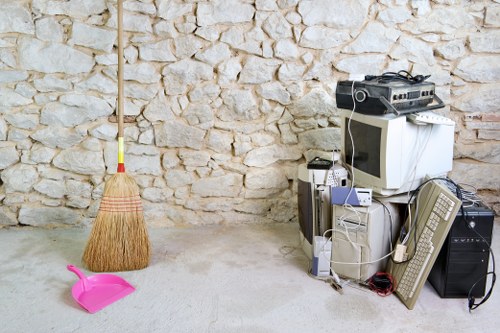 We actively seek partnerships with charities and social enterprises to keep good-quality items in circulation. Our donation partners include national charity re-use networks and local organisations such as Age UK branches and community furniture projects, which accept functional sofas, beds and kitchen units received during flat clearances. These collaborations reduce waste, support reuse, and benefit vulnerable residents through affordable furniture; we log donations to demonstrate social as well as environmental value.
To reduce transport emissions associated with bulk clearances, our fleet includes a growing number of low-carbon vans. We deploy battery-electric and hybrid vans for smaller jobs and Euro 6 low-emission vehicles for heavier runs where required. This commitment to low-carbon transport reduces air pollution and operational carbon footprints across Yeading and the surrounding sustainable rubbish area.
Our service standards include strict sorting protocols: recyclable materials (paper, card, glass, plastic), inert materials (bricks, tiles), treated and untreated wood, metals, textiles and electronic waste are separated. Items destined for reuse are cleaned and photographed where applicable, then allocated to charity partners or refurbishment centres. We prioritise reuse over recycling wherever practical, because extending an item's life has the highest environmental benefit.
 The local context matters. Borough approaches to waste separation influence how we handle materials from flats: several councils in west London operate separate food-waste collections and encourage textile reuse; others run dedicated bulky waste scheduling systems. We integrate these local practices so our clearances feed smoothly into municipal waste streams, avoiding contamination and boosting recovery rates for recyclable fractions.
 Our sustainability commitments can be summarised in a short list of priorities:
- 65% recycling target by 2030 for all flat clearance volumes in Yeading and adjacent zones;
- Consignments to accredited local transfer stations and recycling hubs to ensure traceable processing;
- Formal partnerships with charities and social enterprises to maximise reuse and social benefit;
- Investment in low-carbon vans and route optimisation to cut transport emissions;
- Clear, documented waste segregation that reflects borough kerbside systems to avoid contamination.
How we measure and report progress
We maintain internal tracking for each clearance job, recording weights and destinations for reusable items, recyclables and residual waste. Regular audits against our recycling percentage target ensure transparency and continual improvement. Where practical we publish anonymised diversion rates to demonstrate the environmental performance of our flat clearing and rubbish disposal operations.
Why this matters for Yeading and neighbouring communities
By focusing on an sustainable rubbish area approach, Flat Clearance Yeading helps local residents meet broader borough sustainability goals and reduces pressure on landfill capacity. Our combined strategy of reuse partnerships, use of transfer stations, and low carbon transport fosters a resilient local circular economy — turning flat clearance waste into resources and social value rather than refuse.
Commitment to continuous improvement
We are constantly refining methods: investing in staff training on material identification, expanding charity networks for redistribution, and upgrading our fleet to further reduce emissions. These actions reinforce our role as an environmentally responsible provider of flat clearance services in Yeading and the surrounding area.
For every clearance job we aim to leave properties cleaner and communities greener — a practical, traceable path from waste to reuse that benefits the borough, local charities and the environment alike.